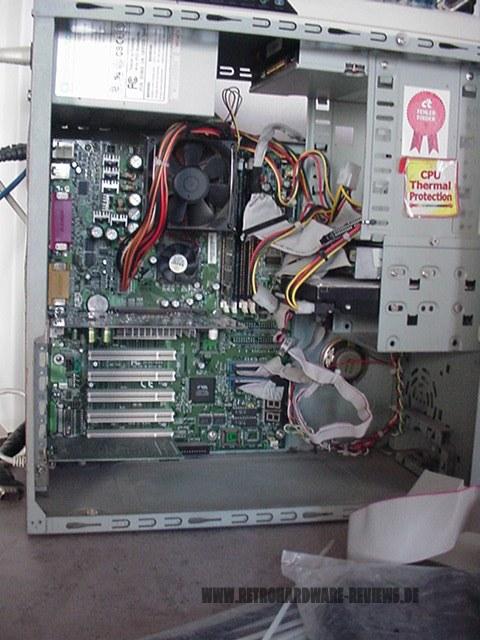
Picture of my VIA KT133A-based test-system. Taken on my trusty Sony Mavica.


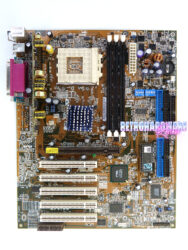
Introduction I’ve had many A7V133 boards in the past 15-20 years and I have only good memories associated with them. Although it’s been some time since I last tinkered with an A7V133, I still remember that the dot trailing some PCB revision numbers is very important. A short research on… Continue reading
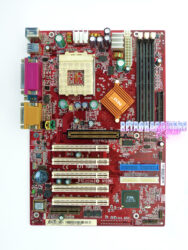
Introduction The K7T Turbo was the final iteration of MSI’s line of KT133A offerings. There are aspects to it, that make it an interesting choice for a retro build. Firstly, there is a 4-pin 12V power connector on the board, with which you can supply power to the CPU. This… Continue reading
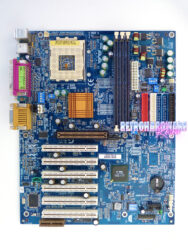
Introduction Gigabyte was about four to six weeks later to the market than many other “big players” with their KT133A board, the GA-7ZXR (Rev. 2.1). But unlike Asus, Abit and MSI for example, they made a lot of changes to the vanilla GA-7ZXR (Rev. 1.x), their previous KT133 offering. From… Continue reading
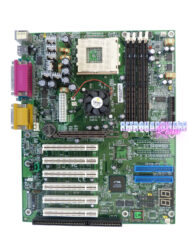
Introduction I was really looking forward to do this review. The EpoX EP-8KTA3 is part of my Win98 testing machine for many years now, where I test older graphics cards, soundcards and so on. I also use it to test SDR memory. It literally never let me down and never… Continue reading
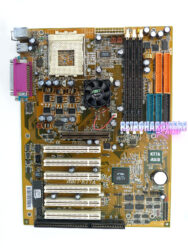
Introduction Next up in our Socket A reviews, we have the Abit KT7A-RAID. It is based upon the VIA KT133A chipset and the revision of our sample is 1.1. Four revisions of the KT7A(-RAID) exist (1.0, 1.1, 1.2 and 1.3), of which only revision 1.3 is compatible with the Athlon… Continue reading
Picture of my VIA KT133A-based test-system. Taken on my trusty Sony Mavica.